
Beyond BITTER: MENA Civil Society Targeted in Hack-For-Hire Operation Linked to BITTER APT


Over the past year, we’ve observed campaigns using top-tier malware like DarkSword, Coruna and Predator; stealthy tools which cost millions to develop. While these advanced kits indeed pose a threat to civil society and organizations, it’s important to remember that successful attacks can also use relatively simple approaches. We continue to observe social engineering, spearphishing and application-based malware successfully used by threat actors to infect security-conscious targets, as is evident in this investigation on a likely hack-for-hire campaign tied to BITTER APT.
In August 2025, researchers from Access Now’s Digital Security Helpline (“the Helpline”) reached out to the Lookout Threat Intelligence team for assistance in determining the attribution of a threat campaign targeting civil society members in the Middle East. The Helpline researchers had been contacted to investigate phishing attacks targeting prominent journalists and opposition politicians in Egypt, as well as other civil society members in the region. During the course of the investigation, they discovered Android malware tied to the phishing infrastructure. Lookout’s analysis of the phishing infrastructure and malware determined that the ongoing campaign is most likely a hack-for-hire operation with ties to BITTER APT (T-APT-17). For full details of Access Now’s investigation, as well as SMEX’s parallel investigation, please check out their blog posts.
Our joint findings expose an espionage campaign that has been operational since at least 2022 until present day primarily targeting civil society members and potentially government officials in the Middle East. The operation features a combination of targeted spearphishing delivered through fake social media accounts and messaging applications leveraging persistent social engineering efforts, which may result in the delivery of Android spyware depending on the target’s device.
Android Surveillance: ProSpy
In October 2025, during the course of our investigation, ESET published a blog about two Android spywares they named ProSpy and ToSpy which targeted users in the United Arab Emirates. These malware families were used in the targeting of civil society in the campaign identified by the Helpline. For easier reading, we will refer to both of these families in this report as ProSpy. ProSpy masquerades as secure messaging applications like Signal, ToTok and Botim to lure victims. ProSpy has many common spyware features to exfiltrate sensitive data like contacts, SMS messages, device hardware and software information and interesting local files.
Capabilities
ProSpy is a feature-packed spyware developed in Kotlin Language. It has the common spyware functions like collecting private information and exfiltrating sensitive files. Lookout acquired 11 samples of ProSpy and the earliest samples go back to August 2024. Below is a list of samples and details:
ProSpy is developed in a relatively professional way and it has worker classes to handle the data collection and exfiltration tasks. It uses object oriented programming principles and introduced new capabilities over the years indicating it is actively being developed.
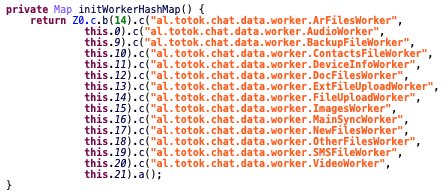
Individual worker classes handle data collection and exfiltration. These worker classes can be periodically scheduled or executed on demand based on the commands received from the C2 server. Contacts, SMS messages and device information are collected and exfiltrated in JSON files. ProSpy traverses the internal and external storage file system and exfiltrates interesting types of files based on file MIME types. Image, audio, video, archive and document files are found and exfiltrated by the respective worker classes.
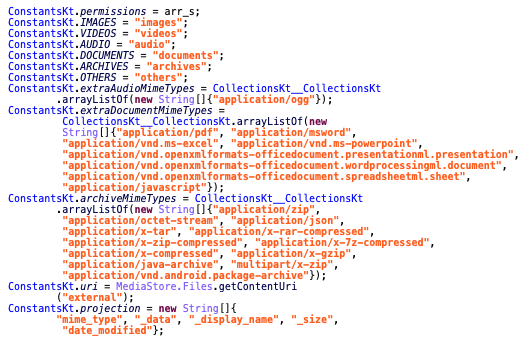
Document file MIME types include MS Office files such as Word, Excel and Power Point. It also exfiltrates PDF and JavaScript files as document files. Archive MIME types are common archive file formats such as zip, rar, tar, 7z and jar, apk and json files.
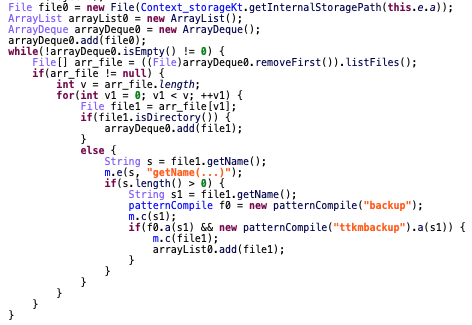
Backup worker scans the file system for files with “backup” and “ttkmbackup” in their filenames. This is intended to exfiltrate backup files from other applications, for instance “ttkmbackup” is the extension for ToTok messaging application backup files.
One interesting and newly implemented worker class is the “NewFilesWorker” which exfiltrates only recently modified files based on their modification date.
ProSpy periodically checks for new commands from the C2 server and can receive 10 commands from the server which are numbered zero to nine.
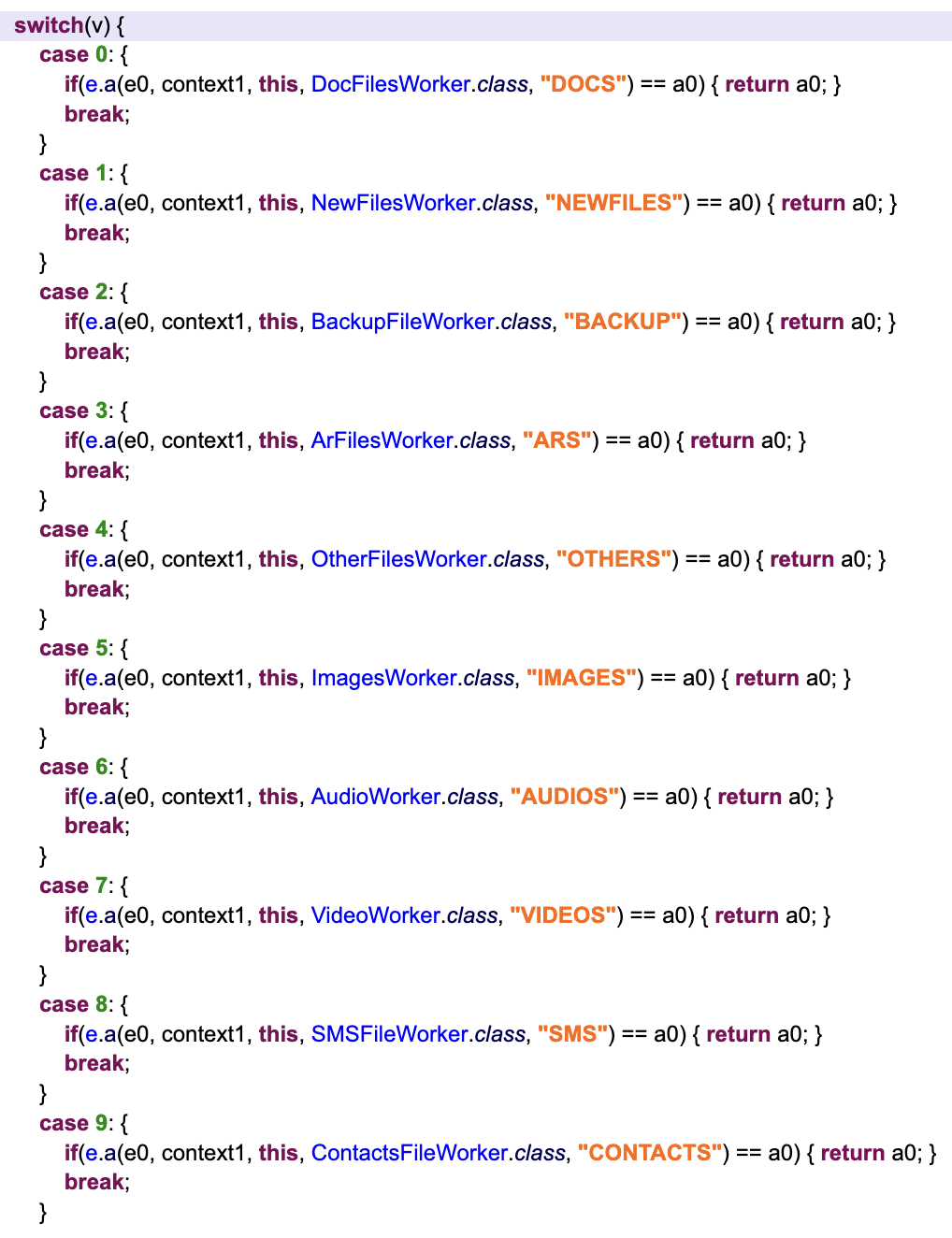
These commands are handled by the respective worker class. Below is a list of the commands and their explanations.
ProSpy Infrastructure
ProSpy uses the Retrofit library to communicate with the C2 server through the server endpoints that start with “/v3/” string. Exfiltration endpoints are easily identifiable by their names like “v3/images”, “v3/videos” etc.
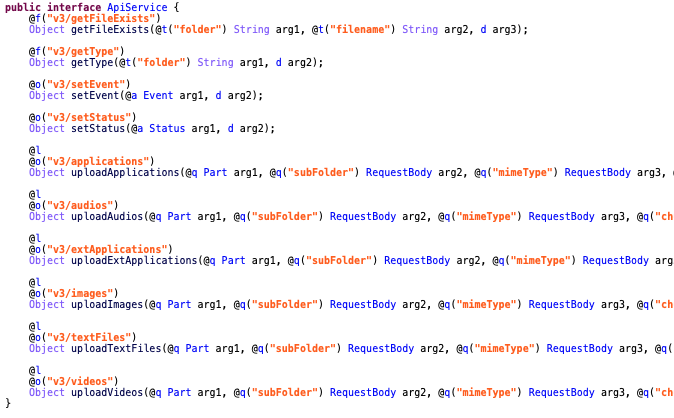
The “v3/setEvent” and “v3/setStatus” endpoints are used to report important feedback like errors and debug messages to the C2 server. ProSpy uses the “v3/getType” endpoint to check for new commands from the C2 server.
The ProSpy samples in the Lookout corpus used six different C2 servers throughout the campaign. Below is the list of different C2 servers:
- https://sgnlapp[.]info
- https://treasuresland[.]cc
- https://relaxmode[.]org
- https://track-portal[.]co
- https://totokapp[.]info
- https://totok-pro[.]io
- https://clubline[.]cc
Lookout researchers also discovered live staging servers that are used to distribute ProSpy samples. These staging sites are simple, single page websites for specific messaging applications to lure victims to download the malicious APK files.
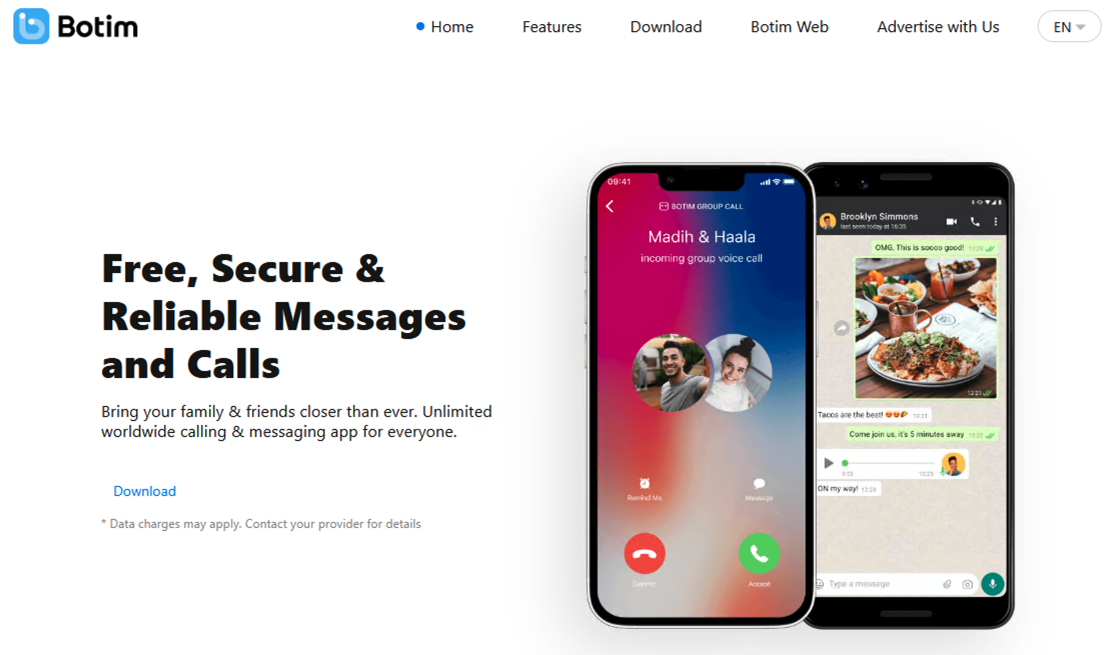
The staging site for the Botim app, “https://botim-app[.]pro”, supports English and Arabic languages and automatically downloads the sample once the site is loaded from the URL “https://botim-app[.]pro/botim_s_v3.9.2.apk”.
Malware Delivery
According to our joint research, the threat actor uses a two stage approach to infect targets. Targets are contacted by malicious sockpuppet personas through social media and networking apps like LinkedIn, or directly through communication applications such as iMessage posing as Apple Support. Targets are then pressured to click on a spearphishing link, which either results in direct targeting of credentials through phishing or in the download of ProSpy malware.
Our observations indicate that victims using iOS devices are targeted via phishing links impersonating iCloud, likely in an attempt to access backups of their mobile devices, in addition to specific targeting of E2EE applications such as Signal and Botim. This technique is common among threat actors who lack reliable malware and delivery mechanisms for targeting iOS devices. In comparison, victims using Android devices are likely directed to install ProSpy samples, as seen in the below example.
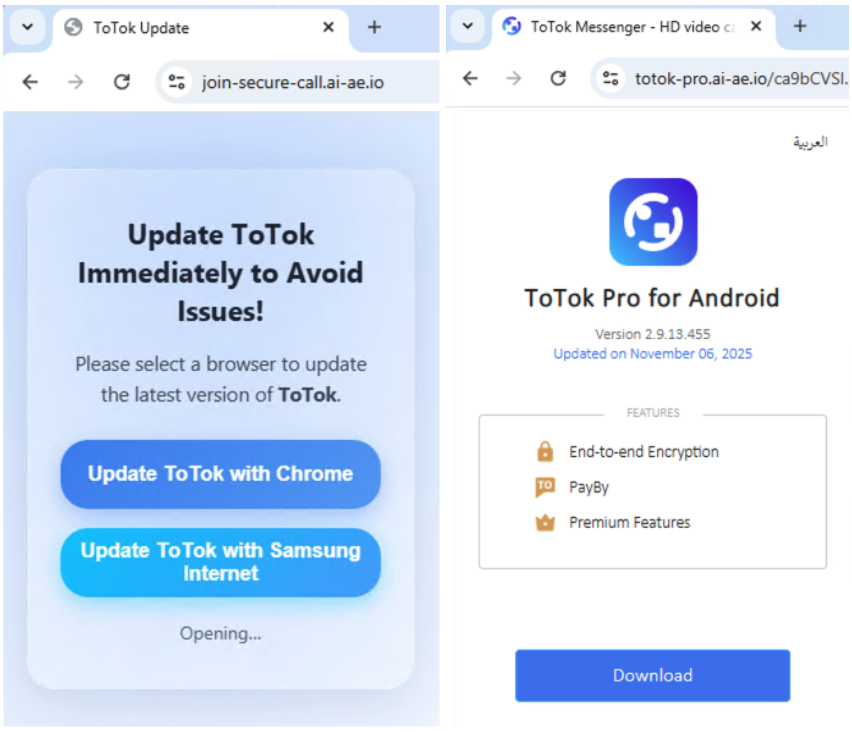
The threat actor presumably invites the target to a video call by sending the URL “https://join-secure-call[.]ai-ae[.]io” and the website asks the user to update the ToTok application. Clicking on either of the buttons redirects the user to a URL with a random looking PHP endpoint, “https://totok-pro[.]ai-ae[.]io/ca9bCVSI.php”. This randomized path is assessed as a means to hide the real distribution site, as visiting the main domain without the php path results in a mostly empty website containing the text “Loading...”.
The second stage is a landing page for the ToTok application and it supports both English and Arabic languages. This landing page also automatically starts downloading the malicious APK file from the URL “https://totok-pro[.]ai-ae[.]io/totok-release_v1.9.13.457_signed_14_12_25.apk”. Below is a list of observed domains distributing or hosting ProSpy samples.
Phishing Campaign:
The backbone of the BITTER-linked campaign targeting civil society is a substantial network of phishing infrastructure. First level domains remain active for a significant period of time, often months, with individual subdomains which imitate communication services being created for targeted attacks against specific victims on the fly. The functionality of the phishing infrastructure will not be covered here, as it has been thoroughly documented by the Helpline in their blog post.
The Helpline and Lookout’s Threat Intelligence team conducted independent analyses of the infrastructure of this campaign, which revealed hundreds of domains used for targeted attacks since at least 2023. The Helpline and Lookout noted distinctive subdomains reused across multiple domains, which allowed us to piece together the campaign and determine the services targeted as lures, as well as potential victims.
The majority of the phishing infrastructure observed fits two distinct patterns:

The subdomain is the targeted lure, in this case impersonating a Zoom invite for a video call. The first level domain consists of two digraphs which may potentially indicate region and language, followed by a TLD. While many of the observed domains fit this pattern, there are many examples that fall outside of it.

In various instances, the subdomain and first level domain combine the lure aspect of the phishing link. This is apparent in the sample above, where the word “information” is formed by combining the end of the subdomain with the first level domain.
We have also observed attacks focused on gaining access to the web versions of encrypted messengers such as Signal. This method, popularized by Russian APTs in recent years, takes advantage of the ability for a Signal account to be linked to multiple mobile and desktop devices. By linking their Signal account via the QR code, the victim gives the threat actor access to their Signal content.
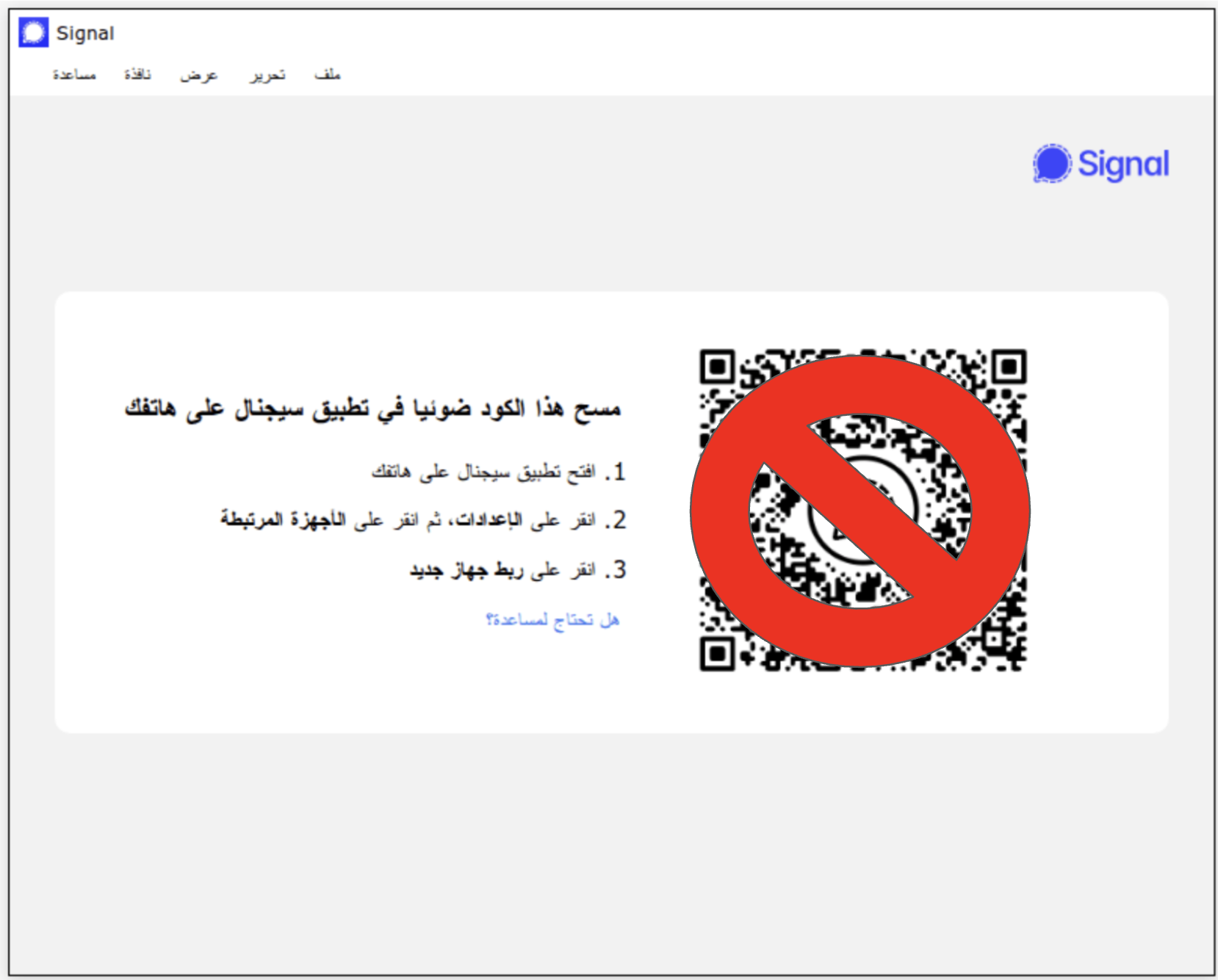
Across all patterns observed in the phishing infrastructure, the use of specific subdomains allowed us to identify targeting of numerous services, including indications of the targeting of government specific services. The phishing campaign largely focuses on credential theft related to these services, using the service as a lure to trick the target, as well as Signal account syncing and ProSpy staging domains. Here is a list of observed phishing lures used in the campaign which have been surmised to the best of our abilities based on the subdomains:
The Helpline and SMEX have investigated multiple cases which identified the targeting of civil society members in the Middle East, including victims in Egypt and Lebanon. Based on the phishing domains observed and ProSpy malware lures, we believe that this campaign also likely targeted victims in Bahrain, Bahraini government entities, UAE, Saudi Arabia, the United Kingdom, Egyptian government entities, and potentially the United States or alumni of US universities. A list of IoCs at the time of writing is appended at the end of this blog.
BITTER Connection
The Helpline shared phishing domains and malware hashes related to this campaign with Lookout Threat Intelligence in the hopes that we could achieve attribution. We began our investigation by mapping all identifiable domains and malware samples that we assess to be tied to the same campaign using various fingerprinting and pivoting techniques.
During our investigation, we observed that one of the domains used for distributing ProSpy, “com-ae[.]net” was attributed to the BITTER APT group by the Maltrail project by referencing an X (formerly Twitter) post. The post by @volrant136, a threat researcher at Hunt.io focused on APT infrastructure, is regarding BITTER APT-related malicious activity and links to a FOFA fingerprint search based on the JARM hash, title, ASN and response length. This query links “com-ae[.]net” domain to the domain “youtubepremiumapp[.]com”, which was a C2 domain used by the Dracarys Android malware in 2022. Dracarys was attributed to the BITTER APT group in 2022 by Meta.
This finding led us to analyze the Dracarys samples and campaign in order to find potential similarities with the ProSpy malware. Despite being developed years apart and using Kotlin versus Java, there are some similarities between the Dracarys family codebase and the ProSpy family codebase.
Both families use worker logic to handle tasks and they name the worker classes similarly. They also both use numbered C2 commands. While ProSpy exfiltrates data to server endpoints starting with “v3”, Dracarys exfiltrates data to server endpoints starting with “r3”.
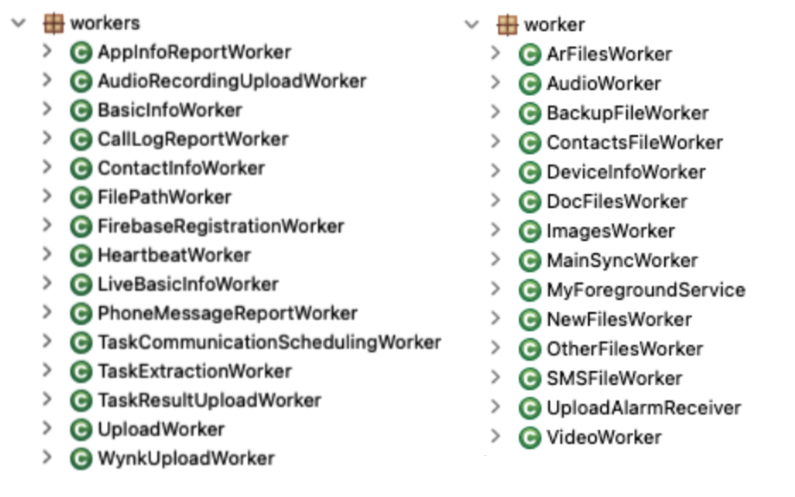
Another similarity is the use of secure messaging apps lures for both families. Dracarys uses Signal, Telegram and Briar app lures similar to the ProSpy’s lures Signal, ToTok and Botim. Dracarys also specifically used “pro” and “premium” lures in their application titles and application ID (package name) values, a technique also seen with ProSpy.
Finally, there are some other minor similarities between this campaign and previous BITTER APT campaigns. Spearphishing is by far the most common initial vector used by BITTER in previous campaigns, and it featured prominently in this attack. The infrastructure used in this campaign for C2 and phishing makes use of PHP scripts, a BITTER favorite, though not uncommon. BITTER has also targeted victims in the Middle East in the past, including publicly observed targeting of Saudi Arabia, and Lookout observed targeting of the UAE leveraging an Android malware not discussed in this post. Targeting of Android devices in particular by BITTER has been observed since at least 2014, which includes the use of various custom malware families over the years.
Beyond BITTER
BITTER APT is a threat actor with suspected ties to the Indian government, an assessment backed by thorough research conducted by Proofpoint and Threatray. A major part of this assessment is based on observed BITTER targeting in previous campaigns, which can be broadly summarized as regional intelligence gathering aligning with Indian government interests. BITTER has been observed targeting military, energy, telecommunications and government entities, such as Ministries of Foreign Affairs, in China, Pakistan, Bangladesh, Saudi Arabia, Turkey and further abroad in rare cases.
While this targeting could potentially align with some of the targeting seen in the ProSpy campaign, such as the Ministry of Foreign Affairs in Bahrain, the targeting of civil society and opposition politicians in the Middle East has never been observed from this threat actor. We believe that the scope of ProSpy targeting likely does not align with said priorities.
Due to this fact, as well as previously observed campaigns in the region tied to Indian hack-for-hire companies, we believe that this may be a hack-for-hire operation with ties to BITTER. This could perhaps be explained through resource overlap, such as overlapping employment between BITTER and a hack-for-hire organization, or alternatively it may indicate an expansion in scope of BITTER activities. Lookout considers that this is supported by both the victim profiles and the observations made by the Helpline in their investigation of the compromise of Egyptian civil society individuals, which indicated that a compromised account appeared to have been logged into from Egypt while the victim was in Lebanon.
The overlap between BITTER APT and hack-for-hire operations is not necessarily novel. For example, in 2020 we observed the same custom intent actions being used in BITTER’s Android malware BitterDawn and separate Android malware linked to the Bahamut threat actor, a known hack-for-hire group. This overlap was not observed in any other applications Lookout has analyzed, indicating a potential link between the two malware families.
Various Indian hack-for-hire companies have also targeted the MENA region in the past. In 2022, Google released a report providing insight into Rebsec, a company offering corporate espionage services which was staffed by former employees of Appin and Belltrox. The Rebsec campaign uncovered by Google targeted Saudi Arabia, Bahrain and the UAE with credential phishing, and notably used phishing domains similar to what we observed in the ProSpy campaign such as icrosoft-acco.unt-log[.]com. While Rebsec’s website is now defunct, an online listing for the company references their espionage capabilities, as well as their specialization in Android.
Based on this analysis, Lookout believes that this is a hack-for-hire campaign with likely ties to South Asia based BITTER APT. Lookout assesses that a hack-for-hire organization with ties to BITTER, or BITTER itself, was likely hired by unknown entities to conduct espionage against civil society targets in the MENA region. This is the first documented case in which the targeting of civil society in the MENA region is linked to BITTER.
Lookout researchers have not uncovered any direct links to known hack-for-hire organizations in the ProSpy campaign, and we believe we have found enough viable links to BITTER APT to make a case for attribution with moderate confidence. We do not know whether this represents an expansion of BITTER’s role, or if it is an indication of overlap between BITTER and an unknown hack-for-hire group. What we do know is that mobile malware continues to be a primary means of spying on civil society, whether it is purchased through a commercial surveillance vendor, outsourced to a hack-for-hire organization or deployed directly by a nation state. We encourage all organizations to be aware of such threats, especially at-risk civil society members, and we look forward to further collaboration with other researchers and victims to expose and prevent such attacks.
We’d like to thank Access Now’s Digital Security Helpline for giving us the opportunity to collaborate on this investigation.
IOCs:
File IoCs
8152b06537853e90103ed956653e446453e80293
50c7cab6221b24636f0d053679b843a194d8f4a1
38174544c6d6e127bbfee0bab031c2370e0a1bec
ae60794c6f1d4893a20009437ebf96d790985a7c
02ee423f1cd1a123169ef1e4e7d40dbb2139d86b
6339add91eb118831571e30801a28a40b2c304a0
154d67f871ffa19dce1a7646d5ae4ff00c509ee4
26fa78ccf9dbe970a4bc2911592ec99db809ffe5
43f4dc193503947cb9449fe1cca8d3feb413a52d
ffaac2fdd9b6f5340d4202227b0b13e09f6ed031
579f9e5db2befccb61c833b355733c24524457ab
ProSpy C2 domains
sgnlapp[.]info
treasuresland[.]cc
relaxmode[.]org
track-portal[.]co
totokapp[.]info
totok-pro[.]io
regularsports[.]org
Spearphishing and Malware Delivery Infrastructure:
Authors

Alemdar Islamoglu
Alemdar Islamoglu is a security intelligence engineer at Lookout who focuses on mobile threats and related threat actors. He has prior experience in reverse engineering, pentesting, and security software development. He also enjoys organizing and participating in capture the flag competitions when he can find the time.

Justin Albrecht
Justin Albrecht is the Global Director of Mobile Threat Intelligence. He works with his team to uncover new mobile threats, track actors and targets, and provide accurate research and reporting on these issues. Justin has over 20 years of experience tracking cyber threat actors, terrorists, and intelligence activities in both the intelligence community, and more recently as a member of Lookout’s Threat Intelligence Team.
.png)


